Showing posts with label kerala. Show all posts

Wednesday, October 10, 2018

Tat Tvam Asi - തത്ത്വമസി

Sabarimala hosts the temple of Ayyappan, located in the Western Ghats range within the Pathanamthitta district in Kerala. The temple is on a hilltop, that is more than 4000 feet above sea level. The Sannidhanam, or the sanctum santorum, is a good climb of about 7-8 kilometers using the shortest route from the banks of Pamba. But, to reach the Sannidhanam, there are a few unwritten rules you need to adhere, that are handed down during the past few decades that people have been going there.

You start with a penance for 41 days, where you keep your physical and mental body clean. Clear your mind of impure thoughts, and develop the ability to remain calm when faced with extreme emotional influence. Specifically people are advised to control anger and not use any foul language. To signify the beginning of this penance, you put a "mala", a chain made of sandalwood or other wood denoting to others that you have begun the journey to reach Ayyappan. Immediately after this ritual, people will also start refering to you as "Ayyappan".

After you kept your promise to yourself during these 41 days, you will need to carry what is called an "Irumudi"; literally meaning "two bags". The bag, actually one bag, that has two compartments, where one is reserved for all the items that are going to be your offering to Ayyappan. The other compartment is for personal items, that you typically require for your journey, ie eatables etc. In earlier days, food was not available near the Sannidhanam, and you had to come back to Pamba. But these days, more offerings are carried in these portions, because of access to food during the journey back and forth.

With a good irumudi, you are now ready to proceed on your journey. There are many ways to reach the Sannidhanam. I will focus on the shortest, which is not necessarily an easy one. The one that i have used. The closest town to the Pamba river entry point to the Sabarimala is Nilakkal. During peak seasons, the government will require all private transportation to stop at this town and then use the KSRTC (government) bus service to reach the Pamba. From Pamba, you take a quick bath in the river. There are times when the water is running very low, and also the bathing ghat can be crowded, and also dirty. For many reasons, the bathing has become a courtesy or a forgone ritual to many. You pay your respects to Pamba Ganapathy and begin your hike.

A good hike, with the irumudi on your head, which is not very heavy, but soon becoming very burdensome, as you climb the steep hill. Since the path is not paved (atleast till the last time i went), there are other obstacles that you encounter. Sharp stones, slippery slopes especially during rain, but one thing is for sure, there are no wild animals.  You reach the main temple zone, and you have one final ascent, the 18 steps to the Sannidhanam. These are at a very high gradient, and you are nearly falling on the person below as you climb up. Once you cross the 18th step, you are in front of the entrance to the Sannidhanam. That's when the truth will hit you. It should it.

Written across the entrance of the Sannidhanam, in huge letters in Malayalam and Devanagari script, is what you were looking for; "തത്ത്വമസി" & "तत्त्वमसि" - "Tat Tvam Asi". Meaning "Thou are that".

You are the one that you seek. After all this journey, this simple truth is revealed to you. That the "one" that you seek is in "you". That God is in you. That God is you. That God and you are the same.

Did you have to come this far? Did you have to endure this journey? Maybe you did, maybe you didnt. The answer again only is known to you. But the hints were always there. The moment you decided you were going to Sabarimala, and you wore the "mala", you were called Ayyappan, by one and all around you. You had already recieved this information, but it takes time to realize the meaning.

For this reason, Sabarimala is open to all. People of all faith are welcome. People adorn in black or blue, colors that are very different from the saffron that is associated with the Hindus. The significance is very important. Recent attempts to change this notwithstanding, the beauty of Sabarimala Ayyappan was that he welcomed all, with a special love for first timers, referred to as Kanni Ayyappan.

Pray to him, pray to yourself. Seek within yourself. You will find it - Tat Tvam Asi!


Thursday, March 4, 2010

Oru Jati, Oru Matham, Oru Daivam Manushyanu

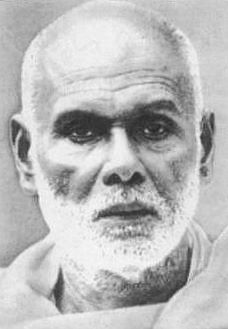
These were the words of Sree Narayana Guru, it simply means, "One Caste, One Religion, One God for all mankind". I was born a hindu, and brought up so. But i also had to fortune to go to schools which which professed a different thought or none at all. My family also helped, because their was no direct imposition of strictures, other than a regular evening prayers, but we were also taught about humanity and brotherhood. My first direct exposure to the concept of one man, one god, or rather one man, many gods (both indirectly preaching the same concept or universal love), was from the singer KJ Yesudas.

I must have been 8 or 9, when life was full of black and white only. Yesudas had come to sing at our school, Bain School (a christian school run by Church of South India), as part of some fund raiser. The crowd was filled with malayalees, including our family. He singing was interrupted after about an hour or so, by some elaborate garlanding ceremony of a whole bunch of people. He soon ended the program, with thanks, but was clearly distraught. The interruption my mother believed was because he sang a few classical songs (bordering on devotional), altho' i dont particularly recall anything specific. We came out and waiting for my dad to pull his car, when we noticed that the real Gana Gandharvan was sitting in a black Ambassador near us, waiting for space to pull his car out. My mother walked up to him, tagging us along, and asked him, "why didnt you sing any Ayyappan songs", to which he pulled a rudraksha chain he was wearing around his neck, showed my mom three or four lockets, one ayyappan, one guruvayoorappan, one jesus and something else. He said, "for me all gods are one", and if we wanted to hear him sing more Ayyappan songs, we could visit his next program in chennai at a local ayyappan temple. The image of the chain extended by his palm, the lockets, and his bearded face mouthing those lines are still vivid in my memory.

This concept was further reinforced at my next school, Asan Memorial. I would later come to know that this founders and the trustees of the school were also devotees of Narayana Guru. But my school prayer was not any elaborate devotional songs, but a simple recital of a sloka by our painting master. And if he was absent, then we said the 'Father in heaven', christian prayer recited by our piano teacher, and sometimes a few small prayers by others. 

I came to fully understand and know about Narayana Guru much later. I remember passing the temple dedicated to him at Vepery, in Chennai, wondering who this man was. I also thought it was some jain cult or some nondescript guru from the north of India. When i did come to know of him, i still wondered this temple had his statue. I am yet to understand that, and more on this a little later.

A Doordharshan program in the 80's, introduced me to Sree Narayana Guru. The single biggest thing that struck me most about him, was the temple he opened in Kerala, were he consecrated a mirror as the prathishta (idol), to be prayed. Already a little attuned with the philosophy of Adi Sankaracharya, i was amazed by this simple yet sublime act. In one stroke, he displayed eloquently the Advaita philosophy. I interpret this as, 'pray to the god that you see in you', or 'you are the god you seek'. Of course, understanding this and appreciating these will require a lot more learning and discipline. But this temple would help bring this concept closer to the people, instead of some abstruse philosophy.

More readings and understandings, brought forth, the revolution he started in Kerala, changing its culture and traditions forever. I always abhorred the caste system, and never felt that true hinduism ever preached it, or practiced it, they way it was done in last few centuries. Narayana Guru's action to break these barriers and to educate people about these malpractices were the other actions that endeared him to me.  And before i forget, his teaching was again reiterated, by a song sung by Yesudas, 'Oru Jathi Oru Matham', in a music cassette of  songs and poems written by Narayana Guru.

This mantra has always reverberated in my mind and soul. We are all one, we just seek different paths to reach our goals. There is no need to play on these differences. Every religion, seem to agree that there is only one god. But the followers take that to mean that the other gods are somehow illegitimate and/or non-existent. Instead of understanding the unanimity professed, people accentuate the anomaly. It is therefore, important to once again reiterate these teachings.