Wednesday, June 6, 2012

Creation Theory

I am not so sure if God created man/woman or whatever. But it appears that man did create God. Every major religion in the world today, has some story around the creation of a man and a woman. The most popular across the world, atleast the Christian and Muslim world, is the story of Adam and Eve. Hindu literature speaks of Manu, who was the first man created by God. There is an entire page on Wikipedia, that is dedicated to the first man and or woman.

However, the more i think about it, the more i am certain, the story is entirely the opposite. God was created by man, not necessarily the first man. He had to. There was simply no way to control the unruly masses. Some form of laws were important. Laws alone were not enough, because, people probably found out that, they could break these laws, without having to worry about punishment. Talk about a flawed justice system. There had to be a higher being, that we all feared and willingly accepted as lord. The punishment for sins and rewards for good deeds were perceived, and not real. I am sure you understand how easy it is to convey perception of pain or reward, than the actual reward itself. Man, bestowed by eternal greed, fear and despair or by the quest for bliss and joy, can be influenced more by a promise than anything tangible.

God is invented or created by man, with a form of his likeness. This God is then presented as someone to be feared, and so must be appeased. The likeness then takes on fearful appendages and weapons. Or sometimes the God is merciful, and then is cloaked in white to signify purity and peace. The imagery must be the reason why some of the newer religions, atleast one in particular, require that there be no image at all to represent God. But even this attempt has not been fully successful, because people have attempted to fabricate alternates, like symbols to personify or equate to God.

The biggest causation for this theory is the medley of God and religions. Each religion has its God. Many of the newer religions, that originated in the Common Era (CE), have one or more Prophets, holy books, and its house of prayer. Each conceivably, distinct from the other. But, each new religion or faith, simply modifies  the set of beliefs in practice at that time. The hope and intent is for Man to evolve into something better, but invariably it can also regress or simply diverge. Man constantly evaluates the moral code structure and wants to gravitate to something different.

Few of the older religions, Hinduism in particular, professes polytheism, and provides its followers an array of gods and goddesses, and also demons and evils. The more the merrier, seemed to be their philosophy. Even the later religions that profess monotheism have not been able to control its followers, and have them adhere to its basic tenets. Many of them have varied branches, that can be radically different from the claimed origins. Man, it seems will not be bound down, when it comes to him and his God. He is more than willing to experiment, and if required another God to suit his tastes.

And finally, if God did really exist, she would clearly have done a better job, than create this species, which manages to invent unique ways to find unhappiness.

Monday, September 26, 2011

What's in a name?

Strange as it seems, a mere name plays a small but important role in the large scheme of my beliefs and my religion and culture. I am not referring to name of inanimate objects or other living creatures, but referring to our names, mine and yours. At an earlier instance, i had blogged about my name, and how it came about. My name was picked by my grandmother. These days you hear about people picking fancy names with intricate meanings, sanskrit one, ancient ones, new and modern ones, famous ones. Ram, Krishna, Aishwarya and Vijay (name used often by Amitabh in movies) used to be some very common ones. 


How does this all matter? And specially what is the religious connotation? Its clear what link that names like Krishna and Ram have. Children are named after personal gods and goddesses as way to appease their deities. Some parents name their children, in the fervent hope that they live up to their names. That will explain the numerous Kalam and Sachin that abound India.


All this seems so foreign, rather noise to me now. A small, and possibly insignificant lament by elderly neighbour fed my thought cells, with the most brilliant concept. It was not new, and is possibly known for centuries to others in India, but not me. To me this single explanation was meant to last a lifetime. 

We used to call this elderly neigbhour, KRK Uncle. KRK is initials, and i will leave it at that. He had named his children Shankaran, Raman and Narayanan, typical malayalee names of these lords. Of course, school, college and workplace had butchered their names to Shanks, Ram and Nara. I was sitting and have some idle chat with him, when someone referred to his youngest by this short name Nara. He politely answered the query, and sent off the enquirer. He then turned to me, and lamented about how names are being butchered. He then said, "in those days, we used to name our children, after gods. At our death bed, when we called out to our sons and daughters, we had the privilege of dying, while uttering the name of a god. It was believed that would take us to heaven." 


What struck me most was not the heaven or the dying part, but the fact that everytime one called out the child's name, you were calling the lord's name too. As i said earlier this simple explanation, prevailed on me. It was clear to me then, that this would influence the name i chose for my child. I called my son, Govind. A trip to Thirupati, few years before the birth of my son, influenced this particular variant of Krishna's name. 

Well there are intentions, and best laid out plans. I can tell you this. I chant the lord's name almost a thousand times a day. It usually takes about ten utterances of Govind, in increasing  tenor and temper, to gain my son's attention. Someone is surely paying attention, and extracting a price.


Thursday, March 4, 2010

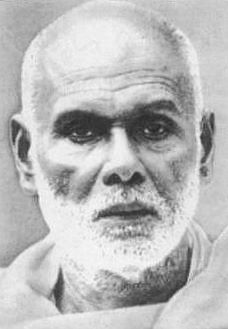
Oru Jati, Oru Matham, Oru Daivam Manushyanu

These were the words of Sree Narayana Guru, it simply means, "One Caste, One Religion, One God for all mankind". I was born a hindu, and brought up so. But i also had to fortune to go to schools which which professed a different thought or none at all. My family also helped, because their was no direct imposition of strictures, other than a regular evening prayers, but we were also taught about humanity and brotherhood. My first direct exposure to the concept of one man, one god, or rather one man, many gods (both indirectly preaching the same concept or universal love), was from the singer KJ Yesudas.

I must have been 8 or 9, when life was full of black and white only. Yesudas had come to sing at our school, Bain School (a christian school run by Church of South India), as part of some fund raiser. The crowd was filled with malayalees, including our family. He singing was interrupted after about an hour or so, by some elaborate garlanding ceremony of a whole bunch of people. He soon ended the program, with thanks, but was clearly distraught. The interruption my mother believed was because he sang a few classical songs (bordering on devotional), altho' i dont particularly recall anything specific. We came out and waiting for my dad to pull his car, when we noticed that the real Gana Gandharvan was sitting in a black Ambassador near us, waiting for space to pull his car out. My mother walked up to him, tagging us along, and asked him, "why didnt you sing any Ayyappan songs", to which he pulled a rudraksha chain he was wearing around his neck, showed my mom three or four lockets, one ayyappan, one guruvayoorappan, one jesus and something else. He said, "for me all gods are one", and if we wanted to hear him sing more Ayyappan songs, we could visit his next program in chennai at a local ayyappan temple. The image of the chain extended by his palm, the lockets, and his bearded face mouthing those lines are still vivid in my memory.

This concept was further reinforced at my next school, Asan Memorial. I would later come to know that this founders and the trustees of the school were also devotees of Narayana Guru. But my school prayer was not any elaborate devotional songs, but a simple recital of a sloka by our painting master. And if he was absent, then we said the 'Father in heaven', christian prayer recited by our piano teacher, and sometimes a few small prayers by others. 

I came to fully understand and know about Narayana Guru much later. I remember passing the temple dedicated to him at Vepery, in Chennai, wondering who this man was. I also thought it was some jain cult or some nondescript guru from the north of India. When i did come to know of him, i still wondered this temple had his statue. I am yet to understand that, and more on this a little later.

A Doordharshan program in the 80's, introduced me to Sree Narayana Guru. The single biggest thing that struck me most about him, was the temple he opened in Kerala, were he consecrated a mirror as the prathishta (idol), to be prayed. Already a little attuned with the philosophy of Adi Sankaracharya, i was amazed by this simple yet sublime act. In one stroke, he displayed eloquently the Advaita philosophy. I interpret this as, 'pray to the god that you see in you', or 'you are the god you seek'. Of course, understanding this and appreciating these will require a lot more learning and discipline. But this temple would help bring this concept closer to the people, instead of some abstruse philosophy.

More readings and understandings, brought forth, the revolution he started in Kerala, changing its culture and traditions forever. I always abhorred the caste system, and never felt that true hinduism ever preached it, or practiced it, they way it was done in last few centuries. Narayana Guru's action to break these barriers and to educate people about these malpractices were the other actions that endeared him to me.  And before i forget, his teaching was again reiterated, by a song sung by Yesudas, 'Oru Jathi Oru Matham', in a music cassette of  songs and poems written by Narayana Guru.

This mantra has always reverberated in my mind and soul. We are all one, we just seek different paths to reach our goals. There is no need to play on these differences. Every religion, seem to agree that there is only one god. But the followers take that to mean that the other gods are somehow illegitimate and/or non-existent. Instead of understanding the unanimity professed, people accentuate the anomaly. It is therefore, important to once again reiterate these teachings.


Thursday, January 21, 2010

Bhaja Govindam - Verse 2

Bhaja Govindam
Verse 2

मूढ जहीहि धनागमतृष्णां
कुरु सद्बुद्धिं मनसि वितृष्णाम् |
यल्लभसे निजकर्मोपात्तं
वित्तं तेन विनोदय चित्तं ||


modha jahehi dhanagamatrishnam
kuru sadbudhim manasi vitrishnam
yalabhase nijakarmopatham
vitham tena vinodaya chitham


oh, fool! give up your insatiable desire for earthly possessions;
be sensible and develop serenity and contentment.
be satisfied and happy with whatever you may earn by the sweat of your brow
and whatever has destiny marked for your lot.


In the second verse of the Bhaja Govindam, sung by Adi Shankara, tells us to give up our thirst for wealth and other earthly possessions. This desire creates a vicious cycle that churns forever, taking us to the heights of joy, but equally bringing us to depths of sorrow. He calls us a fool, because only fools bring on suffering to themselves out of ignorance. Fools are also those among us, who believe we are in control of events, specially when things are going well. When the first mishap occurs, all those qualities that one thought they possessed seems to fail us. True happiness comes from renouncing this path or curbing this desire. How? He says clean the mind of these thoughts, the lust for objects, greed for wealth and focus on something else. Something better and real, the ultimate truth.

It all seems so impractical in todays life. How? With all the pressure of the family, work and self, how does one give up small desires? We need to earn to keep our family healthy, and money to pay rent, car, clothes and so many other things. We are quite unsettled when our neighbhour buys a better and bigger car. Or when our colleague wears a Prada watch, as compared to our more sober Indian Titan brand. At home, simple potato chips from a local bakery or shop is no comparison to a packet of Lays. Where does one start? But, think, more importantly where does this all end?

Adi Sankara time was no different. Even if Pepsi, Prada or Titan hadnt setup shop then, the desire and passion to covet and possess was not less in any sense. He gives a way out of this problem, asking us to take baby steps. Shankaracharya says we should begin with contentment, be happy with what we have. That would be sustenance and a little more. We are looking to live happily, and this is not something that can be bought in a store. A ten rupee note, that goes to buy bag of chips, lasts in our hands, hardly for 10 minutes, and in our mouths even less.

Its not easy to swim against the tide. This commentary is not about brands, and even less about the names mentioned here. Brands are created not by a company or a person, but because of the demand to possess something that many others cannot easily covet. So i will buy a brand of lucky jeans for 100$, because i know my friends will probably not buy such an expensive one. My joy will last, till someone from my circle, new or old, swaggers along in a pair of armani. If we are able to control our desire, in this case, to think, jeans is jeans, be it a 10$ cheap walmart version or a super-expensive designer version, that would be a start. Its not about the fact that we must buy cheap clothes. Buy what you can afford, within your means. Aspiring for something more, will start the ball rolling.

It is not easy. But every time we remind ourselves, and every attempt we make to overcome we win a small victory. This will hopefully inspire us to build on this success to reach the levels that Shankarcharya goads us to.

Sunday, November 15, 2009

Formula for Happiness

All of us are in constant search of happiness or let me put it more coherently, true happiness. From the day we are born till we die this becomes, singly, the biggest motive to our existence. I am happy right now, as i write this, that i finished my run and exercise for the day. I was happy in July 1982, because i gained admission into a decent college, inspite of less than good performance. I was happy a few years back, when i acquired my new digital SLR camera, and yesterday when i purchased a brand new battery for my Mac, and three years back, when i made the switch to the Mac, and before that when i went to a movie, ate outside, ate inside, ate, or didnt eat. I was happy on different occasions when i fulfilled the desire in my heart. And that also means i was sad or unhappy, when i couldnt or gave up on a desire.

I recently was reading of Swami Chinmayananda, from a story published by Amar Chitra Katha. In it, i read a clipping of his discourse, where he elucidates:

Formula for Happiness
Happiness =
Number of desires fulfilled
Total number of desires craved

He explains further that in today's world, or to quote him, "in the western world", happiness is achieved by increasing the numerator, ie. the number of desires fulfilled. And in "the eastern world", happiness is achieved by decreasing the denominator, the number of desires. Think a bit, and like most mathematical equations, this too can be quickly understood. If you apply this formula to your life, you must enumerate these numbers, soon you will understand, that while today you might have achieved a lot of happiness, this cannot be said of you tomorrow or yesterday. And that is because these number are constantly changing.

To us human beings, the curse of desire, today symbolizes the pursuit of happiness. I began my life with a push cart while learning to walk, then i had a tricycle, a small bicycle, a motor cycle, a car, a bigger car, a better car, a more expensive car, a car more expensive and newer than my neighbour's car. I stop to take a breather now, having achieved all these, but remember, i no longer care for my tricycle, motorcycle or the first car. And my breath is soon lost, when my neighbour upstages me with a newer car. Now i have to add one more denominator and will attain happiness only when it is fulfilled. This process is endless and requires constant adjustments to my state of happiness, which now vacillates between one extreme to another, between joy and woe.

If we want to attain true happiness, the only way is to limit our desires, abate them, slowly at first, but steadily. Each desire limited or eliminated, takes you expeditiously closer to a more balanced mind, or state of happiness. This might seem in direct contrast to the current material world's definition of the pursuit of happiness. It has to be, because the material world today depends on us being dissatisfied, to grease the growth of economies. It is made to appear that today's generation is better than the previous, this century better than the last, this millennium better than before. We are in some ways, we have more information in our hands today, but this has not made us more intelligent. It should, we will then be able to understand formulas like these better, and apply it in our lives.

As for me, i am trying. Its not easy. The pressures of modern day living, it is difficult to do something like this. But it requires constant retrospection, and a lot of grit, to stand up against what would be considered normal. It at these moments, a power outside or within, helps.

Thursday, October 8, 2009

Religion and India

India has been the biggest laboratory int the world for invention and creation of religion. Four major religions originated in India, the smallest of which has about 6-12 million followers worldwide. While most nations are home to religions that originated outside, few are as tolerant, and fewer still offer refuge to followers of a foreign religion and their belief and practice. Our Dharma, always allowed us to listen, follow, preach and practice new ideas. There have been a few specific cases of intolerance, retribution, coercion and killing in the name of god and religion, throughout history, including here. But largely the collective Indian physique has tolerated and accepted newer ideas and religious beliefs. Even our Hindu scriptures themselves are replete with such amalgamation of ideas and concepts. And a closer observation will show that while it began its practice earlier than most, it has benefited and even appropriated practices from other religions that came along, most importantly Buddhism and Jainism.

I have attempted to provide a simple narrative for each form of religion that now find a home in India. All i have presented is some factoids, not a theological discussion of these religions. The main focus has been on numbers, and how India and the particular religion are associated, internally and some external comparison of strength in numbers. Numerical strength here, in my argument, is an indication of acceptance and assimilation, and also a factor to counter or favor as evidence for religious persecution.

India has the largest Hindu population in the world. Hindus form almost 80+% of the country's population. Hinduism is not the religion of the State (government of India). Unfortunately the concept of Hinduism is so tied to the history of India, and it has become indistinguishable from the birth of civilization in India. And much of these early facts about Hinduism, India and its ancient history has been colored by the, now considered bogus, theory of Aryan Invasion. Hinduism, like the indigenous Aryan or Dravidian culture, clearly was born in the sub-continent, and every new site and areas being discovered adds credibility to this fact. More excavations and deciphering the Indus Script will ultimately resolve this once and for all. With around 930 million followers, Hindus would become the fourth largest country in the world, immediately after India !

Jainism is probably one of the oldest religion in the world. This is not including Hinduism, which does not have specific timeline. Jainism also follows a very parallel path, although 900 BCE is often mentioned as the time when it originated. The period beginning around 600 BCE, is when Mahavira became its most influential teacher, and helped Jainism spread throughout most of India. Jainism, like Buddhism, influenced the thinking of Hinduism during its period of prominence. Today there are about 6 million Jains around the world, vast majority of them living in India. The official count of Jains in India is about 5 million. The identity of Jains are difficult to clearly ascertain, as they can be easily counted as Hindus in India and elsewhere, because of customs, particular sects and sub-sects and other idiosyncrasies.

Buddhism is another religion that originated in India. Followers of Buddha and his teachings, instituted from about 600 BCE, and has today about 250-500 million followers worldwide. Buddha was born as Prince Siddhartha in Lumbini, India, and attained enlightenment at Bodh Gaya, India. He lived the rest of his worldly life traveling through most parts of India. Buddhism too had a tremendous impact on the followers of Hinduism, not only because of very closely related ideologies etc, but also because of the compassionate form of the religion. However, today there are only 12 million people within India who are followers of the Buddhist religion. Buddhism was spread by Indian kings through the rest of Asia, to other parts of the globe, where they thrive in larger numbers.

Sikhism is one of youngest religion with a major following. There are about 26 million Sikhs around the world today, and over 22 million of them live in India. Founded by its first guru, fondly called Guru Nanak, in the 1500 CE, it has grown as the 5th largest religion in the world. Skihism is still relatively young compared to the timeline of other religious teachings and followers. Sikhs were mixed with the Hindus and considered another sect of Hinduism by many rulers of India and elsewhere until very recently. It has now been able to establish its true and unique identity. 

Zoroastrianism, also known as Parsi in India, has it origins from Persia (today Iran). In 651 CE, with the influence of Islam, and the fall of last non-islamic empire in Persia, Zoroastrians had to migrate out or were slowly but steadily converted to Islam. Large numbers of Zoroastrians landed in the Indian sub-continent, near todays Gujarat and bordering Pakistan. There are only about 200 thousand followers of this faith around the world. The biggest majority live in India, numbering about 70 thousand. A very tight set of rules, that officially does not include conversions, and the practice of inter-community marriages to keep the faith, has resulted in their numbers slowly but steadily declining over the many years.

India is home to more Muslims than only Indonesia, as per 2001 census. As per the most recent available statistics (pending the 2011 census) there are an estimated 165 million Muslims, but that puts India behind only Indonesia and Pakistan. That is more than the population of Bangladesh, Egypt, Iran, Turkey etc. And more than the combined population of Bahrain, Iraq, Jordan, Kuwait, Lebanon, Oman, Palestine, Qatar, Saudi Arabia, Syria, United Arab Emirates and Yemen, the middle-east arab nations. Islam arrived in India, soon after 600 CE, during the lifetime of Prophet Muhammad. The second oldest mosque in the world, exists in India, was built in 629 CE in Kerala, by Cheraman Perumal. Islam spread in India, even before the advent of the Mughals and other invaders who came from the north.

There are over 26 million Christians in India today. That is more than most countries in Europe, except the top 9 (including Russia).  Christianity reached in India, probably with the arrival of St. Thomas in 52 CE. Although there is not much information of his evangelism, he is known to have seeded the faith in this country. Christianity's connection with India, runs even deeper, if more proof and facts can be uncovered around the final journey of Jesus, and his apparent life and final burial in Kashmir, India. These facts and incidence show that Christianity or the preachings of Jesus reached India, during his lifetime or immediately after.

It is important to mention the Bahá'í Faith, which also originated outside India, in present day Iran. There are only about 7 million followers of the faith, and almost a third of them, about 2.2 million live in India.

Not leave Judaism behind, India is home to about 15 thousand jews. This number may seem really inconsequential inside India, and also when compared to the world population of Jews numbering a little more than 13 million. However, the real significance is that Jews arrived in India almost 2500 years ago, around 562 BC (70 CE). There were given sanctuary by local kings and chieftains, and lived and made India home, till the birth of Israel in the 20th century CE, as a nation, when they began a reverse migration.

Thursday, July 2, 2009

Krishna - The guru of all

Gita Dhyanam, Verse 6


भीष्मद्रोणतटा जयद्रथजला गान्धारनीलोत्पला
शाल्यग्राहवती कृपेणवहनी कर्णेन वेलाकुला |
अश्वत्थामविकर्णघोरमकरा दुर्योधनावर्तिनी
सोत्तीर्णा खलु पाण्दवै रणनदी कैवर्तकः केशवः ||

bhiishmadronaatataa jayadrathajalaa gaandhaaraniilotpalaa
shaalyagraahavatii kripenavahanii karNena velAkulA |
ashvatthaamavikarnaghoramakaraa duryodhanAvartinI
sottIrNA khalu pANDavai rananadii kaivartakaH keshavaH ||


Bheeshma Drona the banks; Jayadratha the water; Gandhara a blue water lily;
Salya an alligator; Kripa the current; Karna a great swell of water;
Asvatthama and Vikarna frightful crocodiles; Duryodhana the whirlpool;
was crossed by Pandavas, that battle-river, because of their boatman Keshavah


With Krishna (keshava) at the helms of their boat, the Pandavas were able to cross the river filled with crocodiles, swirling whirlpools, fast current, the frightful water, its waves and swell, not be fooled by innocent looking flowers and banks. The river the great battle of Kurukshetra.

A nice poetic verse, but packed with a lot of meaning. The Gita Dhyanam, is a collection of verses that extol the virtue of Krishna, Keshava or Madhava as he is called within. These verses set an introduction to the Gita, creating the right mindset before one ventures in to the Bhagavad Gita. I learned this first when i attended the CHYK (Chinmaya Yuva Kendra) classes on sundays. While these verses do not lend itself to a sing-song chanting or a melodious poem, they pack in them deep meanings about Krishna, setting the stage for a Guru Shishya format.

This verse in particular, showcases the role of Krishna in single-handedly winning the Kurukshetra war for the pandavas. The philosophical impact of this verse, captures essence of Bhagavad Gita. 'Do your duty' is the strongest message communicated here. To explain in the tone of the verse, if you are in the boat, you could either loose your mind and leave control of your senses, because of the various dangers ahead, but it is best to leave your trust to the boatman to take to your end destination. If one were to look at every action, by attempting to deduce its, you may never start.

The Pandava brothers at different points of their journey expressed despair for different reasons, because people were related, taking the high moral ground or avoiding killing. When all along as a Kshatriya it was their dharma to fight injustice. Krishna had to repeatedly show them the right path and coax them to act. To each of us also, we at times may need a guru to help us navigate the waters of life. They come in many roles, mother, father, teacher, brother, sister, friend, etc., and at different points in life. We also need to understand that sometimes, or rather many times, faith helps. Faith helps close the gap between the action, its plan and the reaction.